 JOIN THE VIP LIST





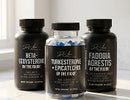



I sell a turkesterone product and I am about to tell you the evidence behind it is thin. That is an uncomfortable sentence for a supplement founder to write, and it is the only honest way to open this. Turkesterone is one of the most searched supplements on the internet and one of the least studied in humans, and almost everything written about it is written by someone who wants you to buy it today. So here is the version I would give a patient.
What Turkesterone Is
Turkesterone is a phytoecdysteroid, a plant steroid found in Ajuga turkestanica and, in smaller amounts, in ordinary foods like spinach and quinoa. It is structurally a steroid and it is not an anabolic androgenic steroid. It is sold for muscle and body composition, and the human research supporting that use is very limited.
What Does Turkesterone Do in the Body
What an Ecdysteroid Actually Is
Ecdysteroids are hormones that insects and other invertebrates use to run molting and development. A 2024 review in Nutrients, Ecdysterone and Turkesterone, notes that more than 550 of them are now known, and that plants make them too, including spinach, quinoa, Rhaponticum carthamoides and Ajuga turkestanica, which is where commercial turkesterone comes from.
That is worth sitting with for a second. You are not taking a human hormone. You are taking a plant compound that happens to share a steroid skeleton, and the reason anyone thought it might build muscle in people is that it does interesting things in insects and in rodent tissue.
The Proposed Mechanism, and How Well It Is Established
The proposed mechanism is that ecdysteroids increase protein synthesis without binding the androgen receptor, which would in theory give you an anabolic effect without the hormonal consequences of an actual androgen. It is a genuinely appealing idea. It is also mostly demonstrated in cell and animal models rather than in people.
There is a bioavailability problem sitting underneath all of it. The same literature notes that phytoecdysteroids are poorly absorbed, and that most commercial turkesterone is standardized to roughly 10 percent turkesterone isolated from Ajuga turkestanica. So a proportion of what is on a label is not turkesterone at all, and a proportion of the turkesterone that is there may never reach your bloodstream in a meaningful amount.
Is Turkesterone Like Steroids
Chemically it is a steroid. Legally and pharmacologically it is not an anabolic steroid, it does not act on the androgen receptor, and it is not a controlled substance in the United States. That distinction matters enormously if you are drug tested, and it deserves more than a paragraph, so the classification and drug-testing question has a companion post of its own rather than three sentences here.
What I will say here is that I never present it as a legal alternative to steroids. That framing is everywhere in this category and it is the framing that gets brands in trouble. If you want the wider picture of how the men’s supplement category is sold, read what I make of it.
Does Turkesterone Raise Your Testosterone
There is no good human evidence that it does, and the proposed mechanism does not predict that it would. Ecdysteroids are not thought to work through the androgen receptor or through the testosterone pathway at all. That is precisely the argument for them being different from anabolic steroids, and it is the same argument for why they should not raise your testosterone.
If low testosterone is your actual concern, that is a testing question and not a supplement question, and my full guide to testosterone in men is a better starting point than any bottle.
What the Research Actually Shows
The Human Trials That Exist
There are very few, and the most directly relevant one is not flattering.
A 2024 study published in Muscles, The Effects of Multiple Acute Turkesterone Doses, gave eleven healthy young men turkesterone at 1000 mg and 2000 mg against placebo, and measured insulin-like growth factor 1 and resting metabolic rate before, three hours after and twenty-four hours after ingestion. The analyses failed to find any significant effect on IGF-1, resting metabolic rate, or lipid and carbohydrate metabolism. The authors report that IGF-1 did rise non-significantly on both turkesterone conditions, and they conclude that the data do not fully support turkesterone as a potent anabolic supplement.
Eleven men is a small study and one acute dosing protocol is not the same as a training block, and the authors say so themselves. But it is the study we have, and it did not find what the marketing promises.
One thing it did find is worth knowing. The authors describe a favorable hemodynamic and gastrointestinal tolerability profile, meaning blood pressure and stomach did fine. That is a tolerability finding, not an efficacy finding, and I am not going to let it do work it cannot do.
What Has Not Been Shown
No long-term human safety data. No demonstrated effect on measured muscle mass in a controlled human trial. No established dose. No consistent product standardization across brands. If somebody quotes you a number for how much muscle turkesterone builds, ask them which human trial produced it.
If you want the general version of how I think about evaluating claims like these before you spend money, read this first.
What Are the Downsides of Turkesterone
Start with the honest ones.
The evidence gap is itself the downside. You are spending money on a compound whose only directly relevant human trial found nothing significant. That is a real cost even if nothing bad happens.
Product quality is the second. This is an unregulated category, standardization varies, and the yield of actual turkesterone in a capsule differs enormously between brands. Third-party testing is what tells a real product apart from powdered filler, and most buyers never check.
Contamination is the third, and if you are tested for anything, it is the risk that matters most. Supplements in the muscle-building category have a documented history of containing things not listed on the label.
And the fourth is opportunity cost. Money spent here is money not spent on the things with actual evidence behind them.
I will not tell you it has no side effects. Long-term human safety data does not exist, and absence of data is not the same as absence of risk. Anyone who tells you a supplement has no known side effects is telling you what has not been studied, not what is safe.
How to Read a Turkesterone Label
If you are going to buy this, buy it properly, because the gap between a good product and an expensive powder is wider here than in almost any other category.
Yield Is the Number That Matters
The percentage on the front of the bottle is usually the standardization, not the dose. A capsule described as 500 mg of Ajuga turkestanica extract standardized to 10 percent turkesterone contains 50 mg of turkesterone. Plenty of labels lead with the larger number and let you assume it is the smaller one. Read the supplement facts panel rather than the front of the bottle, and if the yield is not stated anywhere, that is your answer about the brand.
Third-Party Testing Is Not Optional Here
Muscle-building supplements are the category with the worst documented record for containing things the label does not mention. In an unregulated market a certificate of analysis from an independent laboratory is the only meaningful evidence that what you bought is what you paid for. If a company will not produce one on request, buy from one that will.
Be Suspicious of Absolute Claims
Anyone telling you a supplement produces the same results as anabolic steroids, or that it has no side effects at all, is making a claim no human trial supports. I hold my own brand to that, and I would rather lose a sale than make one on a sentence I cannot defend.
Where Creatine Sits, and Why I Would Start There
If your goal is muscle and strength, creatine monohydrate has decades of human trials, an established dose and a safety record that turkesterone cannot approach. I would rather you spend your money there and be right than spend it here and be hopeful.
That is not a reason nothing else is worth taking. It is a reason to be clear about which category you are in. Creatine is a settled question. Turkesterone is an open one.
Who It May Suit, and Who Should Not Bother
Most of the people reading my work are not bodybuilders. They are women and men with thyroid and hormone problems who are tired, gaining weight and losing muscle, and that changes the whole question. For that person, the muscle loss is downstream of an undertreated thyroid or an insulin problem, and no ecdysteroid touches either. Fix the upstream problem first. That is the whole approach behind everything I formulate.
Who might reasonably try it. Someone already training seriously and eating properly, whose fundamentals are handled, who understands the evidence is thin and is spending discretionary money with their eyes open.
Who should not bother. Anyone hoping it substitutes for training or for treating a hormone problem. Anyone subject to drug testing, until they have checked with their own testing authority. Anyone taking prescription medication, without asking their prescriber first. Anyone pregnant or breastfeeding. And anyone who cannot afford to spend money on a maybe.
I want to be plain about what that last group means, because it is larger than the supplement industry likes to admit. A great many people buying compounds like this are spending money they do not really have, on the hope that one bottle will change something a year of training and eating has not. That hope is what the category is built on, and it is the reason I would rather publish a post that talks somebody out of a purchase than one that talks them into it. If the fundamentals are not in place, no ecdysteroid will rescue them, and if the fundamentals are in place, you may not need one.
If you have read all that and still want to look at the formula I make, it is here, and I would rather you buy it having read this page than a page that promised you steroids without the side effects.
FAQ
What does turkesterone do in the body?
The proposed mechanism is that it increases protein synthesis without binding the androgen receptor, which is what would separate it from an anabolic steroid. Most of that work is in cell and animal models. The one directly relevant human trial found no significant effect on IGF-1 or resting metabolic rate after acute dosing. Absorption is also poor, which may be part of why human results have been underwhelming.
What are the downsides of turkesterone?
The main one is that you may be paying for nothing, since the human evidence is very thin. Beyond that, product quality varies widely in an unregulated category, contamination is a documented problem in muscle-building supplements and matters enormously if you are drug tested, and long-term human safety data does not exist. No known side effects means not studied, not proven safe.
Is turkesterone like steroids?
It is a steroid in the chemical sense, sharing the four-ring structure. It is not an anabolic androgenic steroid, it is not thought to act on the androgen receptor, and it is not a controlled substance in the United States. I do not describe it as a legal alternative to steroids, because that framing implies an equivalence the evidence does not support.
Does turkesterone raise your testosterone?
There is no good human evidence that it does, and the proposed mechanism does not predict it would, since ecdysteroids are not thought to work through the testosterone pathway. If your concern is low testosterone, the useful next step is a proper panel rather than a supplement, because you cannot fix a number you have not measured.