 JOIN THE VIP LIST





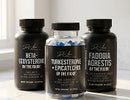



If you are tested for anything, by a sports body, an employer or the military, this is a question with consequences and you deserve a straight answer rather than a sales page. I make a turkesterone product and I am going to answer it from the anti-doping bodies’ own published positions, with links, so you can check me.
Is Turkesterone a Steroid
It is a steroid in the chemical sense and it is not an anabolic steroid in the legal or pharmacological sense. Turkesterone is an ecdysteroid, a class of steroid-like compounds made by insects, plants and fungi. Anabolic androgenic steroids are controlled substances that act on the androgen receptor. Turkesterone is neither controlled nor an androgen, and confusing the two is where people get into trouble.
Is Turkesterone an Anabolic Steroid
No, and the distinction is not a technicality.
What Ecdysteroid Means Chemically
USADA describes ecdysteroids, including ecdysterone and turkesterone, as steroid-like compounds that occur naturally in insects, some plants and some fungi, where they regulate molting, growth and reproduction in insects and help protect plants from stress and insect attack. They are found in ordinary food too, with the highest concentrations in spinach and quinoa. If you eat spinach, you consume ecdysteroids.
Why That Is Not the Same as an Androgen
Operation Supplement Safety, the US Department of Defense program that advises service members on supplements, puts it plainly in its article on ecdysterone and turkesterone. Ecdysteroids should not be confused with anabolic steroids, which are controlled substances and are illegal to purchase, use or possess without a prescription.
The mechanism differs too. USADA notes that mammals do not naturally produce ecdysteroids and that their actions in mammals are not well understood, that the structural differences from human steroid hormones were long thought to rule out any binding to human hormone receptors, and that there is now some evidence ecdysteroids may interact with certain estrogen receptors. That is a live research question, not a settled anabolic mechanism, and it is worth noticing that the receptor under discussion is an estrogen receptor rather than an androgen one.
Will Turkesterone Show Up on a Drug Test
What the Anti-Doping Bodies Currently Say
As of now, ecdysteroids are not on the World Anti-Doping Agency Prohibited List. USADA states this directly and adds that because they are not prohibited, no Therapeutic Use Exemption is required or available.
The word that matters in that paragraph is currently. WADA added ecdysterone to its Monitoring Program in 2020, which is the list of substances not prohibited but watched to detect patterns of misuse in sport. Monitoring is how substances get considered for prohibition. If you compete under WADA rules, check the current status yourself before every season rather than trusting a blog post, including this one.
OPSS notes that ecdysterone, turkesterone and their plant sources are not prohibited for service members either, with one specific catch worth knowing. Some products list these ingredients alongside hydroxypropyl-beta-cyclodextrin, which is on the Department of Defense Prohibited Dietary Supplement Ingredients List. So the ecdysteroid is fine and the delivery agent in that particular formulation is not. Read the whole label, not the headline ingredient.
The Contamination Risk, Which Is the Real Hazard
This is the part that actually costs people careers, and it has nothing to do with turkesterone itself.
OPSS lists two concerns with this category. Inaccurate labeling, where actual ecdysterone or turkesterone content varies from batch to batch and differs from what the label claims. And potential contamination and adulteration, where products may contain prohibited substances or unknown ingredients. It cites the FDA’s warning that bodybuilding products can be risky and that some may illegally contain steroids or steroid-like substances.
Read that again if you are tested. The risk is not that turkesterone triggers a positive. The risk is that a muscle-building supplement bought from a company with no independent testing contains something that does, and the label never mentioned it. Anti-doping rules hold the athlete responsible for what is in their body regardless of how it got there.
The labeling problem is not hypothetical either. Published research notes that most available turkesterone products are standardized to around 10 percent turkesterone isolated from Ajuga turkestanica, and how faithfully any given brand hits its own stated yield is exactly what varies. If you are tested, third-party certification is not optional polish. It is the whole thing.
Is Turkesterone Actually Safe
Honestly, nobody knows, and I would rather tell you that than sell you reassurance.
OPSS states that current clinical trial data suggests a pharmaceutical-grade formulation of ecdysterone, BIO101, is possibly safe at 350 mg twice daily for up to nine months, but that the safety of ecdysterone used as a dietary supplement ingredient remains unknown, and that there is insufficient evidence to confirm the safety of turkesterone supplementation in humans.
That is the accurate position. Not dangerous, not proven safe, understudied. If you want the habit of reading every supplement claim this way, rather than only this one, that is the piece to read next. You will find pages telling you it has no known side effects. What that phrase actually describes is a gap in the research, and presenting a gap as a safety record is the thing I am asking you to watch for across this whole category, including on any page selling you a bottle.
What Does Turkesterone Do to the Body
Short version, because I wrote the long one separately. The proposed effect is increased protein synthesis without androgen receptor activity. OPSS says laboratory and animal studies have shown potential anabolic effects through a possible estrogen receptor interaction, and that results from the few small human studies are inconsistent, so more large-scale, high-quality research is needed. My companion post walks through the human trial data in detail.
Will Turkesterone Help You Gain Muscle
The honest answer is that the evidence does not currently support a confident yes. The animal and cell work is interesting, the human work is small and inconsistent, and no anti-doping body treats it as an established performance enhancer, which tells you something in itself. If someone quotes you a figure for how much muscle it adds, ask which human trial it came from.
Is Turkesterone Legal
Yes, in the United States. It is sold as a dietary supplement ingredient, it is not a controlled substance, and USADA notes there are no FDA-approved medications containing ecdysteroids. Legal to buy is not the same as proven to work or confirmed safe, and those three questions get answered by different evidence.
Before You Buy, Depending on Who Is Testing You
If you are drug tested by anyone, your first move is not to buy this. It is to check the current status with your own testing authority, and then to buy only third-party certified products if you proceed. USADA maintains resources on exactly that, and the certification is the part that protects you.
If you are a service member, read the full label for the prohibited excipient described above before anything else.
If you are not tested at all, the question becomes the ordinary one of whether an understudied supplement is worth your money, which I answer at length in the companion post rather than here. It is also worth stepping back and asking how the men’s supplement market talks to you in general, which is a habit I would like more people to have and one I have written about separately.
And if you came to this page because you are tired, losing muscle and gaining weight, that is very often a thyroid or hormone problem rather than a supplement gap, and no ecdysteroid addresses it. That is the lane most of my readers are actually in, and the rest of what I make is built for it.
If men’s hormones are your question specifically, read the full testosterone guide instead, because a low number there explains far more of what people blame on aging than any supplement does.
If you have read all of that and still want the formula I make, it is here. I would rather you arrive at it through this page than through one promising steroid results without steroid consequences.
FAQ
Is turkesterone actually safe?
There is not enough human research to say. Operation Supplement Safety states that the safety of ecdysterone as a dietary supplement ingredient remains unknown and that there is insufficient evidence to confirm the safety of turkesterone supplementation in humans. Trial data on a pharmaceutical-grade ecdysterone formulation suggests possible safety at a specific dose for up to nine months, which does not transfer to an unregulated supplement.
What does turkesterone do to the body?
The proposed effect is increased protein synthesis without acting on the androgen receptor, possibly through an estrogen receptor interaction. Laboratory and animal studies have shown potential anabolic effects, but the few small human studies are inconsistent and larger high-quality research is needed. Absorption of these compounds is also poor, which may be part of why human results have disappointed.
Is turkesterone an anabolic steroid?
No. Anabolic androgenic steroids are controlled substances that act on the androgen receptor and require a prescription. Turkesterone is an ecdysteroid, a steroid-like compound found in insects, plants and fungi, and it is neither controlled nor an androgen. Products marketing it as a natural steroid or steroid alternative are using language the science does not support.
Will turkesterone help you gain muscle?
The current evidence does not support a confident yes. Animal and cell studies suggest potential anabolic effects, human studies are few, small and inconsistent, and no anti-doping body classifies it as an established performance enhancer. If muscle is the goal, creatine monohydrate has decades of human data behind it and would be my first suggestion.