 JOIN THE VIP LIST






Thyroid supplement shopping feels like gambling because the market is structured to make it that way. Ingredient transparency is inconsistent, formulation logic is rarely explained, and the marketing language on an ineffective product looks almost identical to the language on one that actually works. This guide gives you a five-point framework for filtering providers before you spend another dollar.
Key Takeaways
-
A peer-reviewed study published in the journal Thyroid (Kang et al., 2013) found that nine of ten commercially tested thyroid health supplements contained the active hormone triiodothyronine (T3) without clear label disclosure. Making this a hormone intervention category, not just a supplement category.
-
"Proprietary blend" labeling legally hides whether key nutrients like selenium, zinc, or iodine appear at therapeutic doses or trace amounts that don't do anything.
-
Matching a formula to your specific thyroid dysfunction pattern, not just "thyroid support" generally, is what separates products that move the needle from ones that collect dust.
-
Practitioner-designed formulas carry a different accountability standard than white-label products with a wellness brand added at the last step.
-
The most confident-sounding pitch is often the least trustworthy signal. Vague benefit language with no mechanism explanation is a red flag, not reassurance.
Why Does Buying Thyroid Supplements Feel Like Gambling?
You read the label. You check the reviews. You buy the product. And then nothing changes. Or something shifts in a way you didn't expect and can't explain.
That's not bad luck. It's the predictable outcome of a regulatory environment where dietary supplements don't require pre-market FDA approval the way pharmaceuticals do. Manufacturers are largely self-policing. A company can legally print "thyroid support" on a bottle, use vague ingredient language, and sell it nationwide. Even if the formula can't do what the name implies.
The problem isn't that thyroid supplements don't work. Some do. The problem is that the marketing language used to sell ineffective products is nearly identical to the language used to sell effective ones. Without a framework, you're pattern-matching against the wrong signal.
What's Actually Inside Most "Thyroid Support" Formulas?
Most buyers assume a thyroid supplement contains nutrients that help the thyroid function better. That's not always what's in the bottle.
A peer-reviewed study by Kang et al., published in the journal Thyroid in 2013, tested ten commercially available thyroid health supplements. Nine out of ten contained triiodothyronine (T3). A potent, fast-acting thyroid hormone. Five of the ten also contained thyroxine (T4). In the herbal capsule subcategory, every single product tested contained T3. This is the finding that should change how you approach this category entirely.
Taking T3 without knowing it's in your supplement means you can't track how it's interacting with your existing hormone levels, can't communicate it accurately to your doctor, and can't make an informed decision about dose adjustments. The bottle looks like a natural product. Biologically, it's not.
That's the category reframe that matters most: thyroid support isn't a supplement category. It's a hormone intervention category dressed up in wellness packaging. Treat it with that level of scrutiny.
The DRIFT Framework: Five Filters for Evaluating Thyroid Supplement Providers
The DRIFT framework is a five-point evaluation system designed to surface the specific failure modes that cost thyroid patients money and health outcomes. Use it when you're comparing providers. The only time to skip it is if you already have a practitioner who's reviewed a formula against your current labs.
D. Disclosure. Does the label show individual ingredient doses, or does it use proprietary blend language? Proprietary blends are legal. They're also a mechanism for listing every marketable ingredient while using sub-therapeutic doses of all of them. Selenium at 5 mcg isn't doing anything. Selenium at 100-200 mcg might. You can't know unless the dose is disclosed. If it isn't, treat it as if the meaningful ingredient isn't there.
R. Rationale. Is there a stated mechanism. A reason why this formula addresses this dysfunction? "Supports thyroid health" isn't a rationale. A rationale sounds like: this formula targets the conversion bottleneck between T4 and T3 by supplying selenium and zinc at doses that support deiodinase enzyme activity. If the provider can't explain the mechanism, they probably don't know it.
I. Identity of the formulator. Is there a named practitioner behind the formula, someone with clinical experience treating thyroid patients, or is this a white-label product from a contract manufacturer with a wellness brand applied at the end? White-label products aren't automatically bad. But they carry no accountability. A practitioner whose name is on the formula has professional standing attached to its performance.
F. Flag for undisclosed hormones. Does the formula contain desiccated thyroid, thyroid glandular, bovine thyroid, or porcine thyroid? These are animal-derived thyroid tissues that can contain T3 and T4. That's not automatically a problem. But it must be disclosed, and you need to know before you take it, especially if you're already on thyroid medication.
T. Transparency about limitations. Does the provider acknowledge who the product isn't right for? Providers claiming their formula works for every thyroid situation don't understand thyroid dysfunction. Hypothyroidism, Hashimoto's, subclinical thyroid issues, and post-thyroidectomy patients have meaningfully different needs. A formula that claims to serve all of them equally is optimized for marketing, not outcomes. Honest providers draw the line.
What Does a Trustworthy Provider Actually Look Like?
Consider a common scenario: a woman in her mid-40s has been told her TSH is "within normal range," but she's still gaining weight, losing hair, and hitting a wall by early afternoon. She's tried two thyroid supplements found through social media. Neither worked. When she finally reads the labels carefully, both use proprietary blends. Neither discloses individual doses. Neither explains what mechanism it's working through.
She eventually finds a formula designed by a practitioner who built it around patterns she'd seen repeatedly. Patients whose labs looked acceptable on paper but who felt terrible in daily life. The formula targets specific conversion and absorption bottlenecks. Doses are disclosed. The provider explains exactly who the formula is designed for, and who it isn't.
That difference isn't accidental. That's what the DRIFT framework is built to surface.
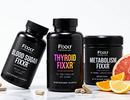
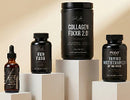
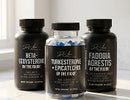
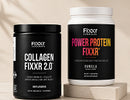
The Thyroid Fixxr formula at Better Life Doctor was developed by Dr. Amie Hornaman, a thyroid and hormone specialist who built her approach around the gap between "normal" lab results and real patient symptoms. It's not positioned as a universal thyroid supplement. It's designed for a specific dysfunction pattern. Which is exactly what you should be looking for. You can also browse the full supplement line to see how each formula maps to a distinct hormonal issue rather than a general category.
Acting on This vs. Waiting It Out: What the Decision Actually Costs
Most people don't think of inaction as a choice with a price tag. It is.
|
Decision |
What It Typically Looks Like |
The Real Cost |
|
Working with a practitioner-designed, transparent formula |
Clear ingredient disclosure, mechanism explained, dysfunction-matched |
Time invested in finding the right match, but outcomes are trackable |
|
Using a generic "thyroid support" product |
Proprietary blends, vague claims, no formulator accountability |
Continued symptoms, money spent on products not designed for your pattern |
|
Waiting until labs are more "obviously" abnormal |
Feels cautious and responsible |
Symptoms compound, nutrient depletions deepen, recovery takes longer |
|
Going it alone with no framework |
Trial-and-error purchasing |
High cost, low signal, and potential exposure to undisclosed hormone content |
The most expensive option in this table isn't the premium supplement. It's continuing to apply the wrong tools to your pattern while symptoms accumulate.
How Do You Evaluate Social Proof Without Getting Misled?
Social proof isn't just marketing. It answers the question every buyer is actually asking: will this work for someone in my situation?
But not all testimonials carry the same weight. Generic five-star reviews with no specifics tell you almost nothing. What you're looking for is outcome-specific feedback. Which symptoms changed, over what timeframe, and in what context. If a formula is designed for T4-to-T3 conversion issues and the reviews consistently describe better energy and sharper thinking (both downstream effects of improved conversion), that's meaningful signal. If the reviews could apply to any supplement in any category, they're noise.
Better Life Doctor publishes real customer results with specific outcome descriptions. Not just aggregate ratings. That distinction reflects a different standard of accountability.
When Thyroid Supplements Aren't the Right Primary Tool
Thyroid supplements aren't a replacement for prescription thyroid medication when confirmed hypothyroidism requires pharmacological management. If your TSH is significantly elevated and your practitioner has recommended medication, a supplement isn't an equivalent substitute. Any provider who suggests otherwise is misleading you, and that's a disqualifying signal.
Supplements work best in these situations: subclinical thyroid dysfunction where labs are borderline but symptoms are present; supporting T4-to-T3 conversion when medication alone isn't resolving symptoms; correcting nutrient depletions, selenium, iodine, zinc, that impair thyroid function; and Hashimoto's management as part of a broader protocol.
They're not the right primary tool if you've had a thyroidectomy and are fully dependent on synthetic hormone replacement, or if you're dealing with a thyroid situation that requires immediate medical attention.
Honest providers say this outright. Providers who promise their formula works for every thyroid scenario are the ones to walk away from.
FAQ
How do I know if a thyroid supplement contains actual hormones?
Look for these on the label: desiccated thyroid, thyroid glandular, bovine thyroid, or porcine thyroid. These are animal-derived thyroid tissues that contain T3 and T4. Seeing them doesn't automatically mean the product is wrong for you. But you need to know they're there, especially if you're already on thyroid medication. The Kang et al. (2013) Thyroid study is the clearest published evidence of how widespread undisclosed hormone content has been in this category.
Can I take a thyroid supplement if I'm already on levothyroxine?
That's a question for your prescribing doctor, not a supplement label. Some thyroid support nutrients, like selenium, are generally considered compatible with medication at appropriate doses, but anything containing T3 or T4, including glandular ingredients, can interact with your prescription dose and affect your lab results. Don't add a thyroid supplement to an existing medication regimen without reviewing it with your doctor first.
What's the difference between thyroid support and thyroid hormone replacement?
Hormone replacement, levothyroxine, desiccated thyroid medication, directly supplies T4 or T3 to compensate for what your thyroid isn't producing. It's prescription-only for a reason. A thyroid support supplement is designed to provide the nutrients the thyroid needs to function, or to support the T4-to-T3 conversion process. They work through different mechanisms and aren't interchangeable. Conflating them is one of the most common and costly mistakes in this category.
Why did a thyroid supplement work for my friend but not for me?
Because thyroid dysfunction isn't one condition. It's several, with different root causes. Your friend's issue might be an iodine deficiency. Yours might be a conversion problem between T4 and T3. A formula targeting one pattern won't necessarily address the other. This is exactly why matching the supplement to your specific dysfunction pattern matters more than finding the "best thyroid supplement" in general.
How long does it realistically take to see results from a thyroid supplement?
It depends on what you're addressing and how nutrient depleted you are. Correcting something like a selenium deficiency can take weeks to show up as symptom improvement because the body needs time to restore enzyme function. Energy and cognitive changes tend to be reported earlier than weight shifts. Plan for a minimum of four to six weeks of consistent use before drawing conclusions, and track specific symptoms rather than waiting for a general sense of feeling better.
Is a practitioner-designed formula actually better, or is that just a marketing label?
It depends on whether the practitioner's clinical experience is actually reflected in the formula. Not just their photo on the packaging. The meaningful difference is this: a practitioner who has treated a significant number of thyroid patients knows which dysfunction patterns are most common, which nutrients are most consistently depleted, and what doses produce results versus what doses just look credible on a label. That knowledge either shows up in the formula or it doesn't. Ask whether the formulator can explain the mechanism behind every ingredient at the dose listed. That question alone will tell you a lot.
What if I've tried multiple thyroid supplements and none of them worked?
That's actually useful diagnostic information. If the products you've tried used proprietary blends, contained undisclosed glandulars, or were positioned as general thyroid support rather than targeting a specific dysfunction, you haven't yet tested whether a precisely formulated product works for your pattern. The failure of generic products doesn't mean supplements can't help. It means the wrong tools were applied to your specific situation. Getting clear on your dysfunction pattern, through labs and symptom mapping, changes what you're looking for entirely.
Stop Guessing. Start Matching.
You've already done the hard work of recognizing something is wrong. You've read labels, tried products, and stayed patient through results that never came. The next step isn't trying another random supplement. It's applying a framework that filters out the noise and points you toward a formula designed for your specific pattern. Not where a generic label assumes you are.
If you're ready to work with a formula built by someone who has spent years treating the exact dysfunction you're describing, explore the Better Life Doctor supplement line and find the formula that actually matches where you are.
References
Kang G, et al. (2013). Thyroid-related content in commercially available thyroid health supplements. Thyroid journal. T3 and T4 content identified in nine of ten commercially tested products, with all five herbal capsule products containing T3