 JOIN THE VIP LIST



Half of what gets recommended for Hashimoto’s is sold by the person recommending it, and I am aware that includes me. So this post does two things most brand-written supplement pages avoid. It tells you which nutrient has actual meta-analysis evidence behind it and which ones did not perform, and it spends a whole section on what to be careful with, including a product I sell.
What Supplements Help With Hashimoto’s
Selenium has the strongest evidence for lowering thyroid antibodies. Vitamin D, magnesium and zinc are worth having at adequate levels, though the evidence that supplementing them changes antibodies is weaker than the marketing suggests. None of this treats Hashimoto’s or replaces thyroid medication. This is nutritional support alongside medical care, not instead of it.
What Is the Best Supplement to Take for Hashimoto’s
If I had to name one, selenium, and I can point at the reason rather than assert it.
Selenium
A 2024 systematic review and meta-analysis in Frontiers in Endocrinology comparing different supplements in Hashimoto’s thyroiditis found selenium significantly reduced thyroid peroxidase antibodies, with a standardized mean difference of minus 2.44 and a 95 percent confidence interval of minus 4.19 to minus 0.69, and thyroglobulin antibodies, at minus 2.76 with a 95 percent confidence interval of minus 4.50 to minus 1.02. Both of those confidence intervals sit entirely below zero, which is what makes the finding a real one rather than a hopeful one.
Selenium is also mechanistically sensible here. The enzymes that convert T4 into active T3 are selenoproteins, and the thyroid holds more selenium per gram than any other tissue. Two Brazil nuts a day supplies a meaningful amount for many people, which is worth knowing before you buy anything.
Vitamin D
Here is the finding I did not expect and am not going to hide. In that same analysis, vitamin D used alone did not effectively reduce thyroid peroxidase antibodies or thyroglobulin antibodies over six months of treatment. Neither did myo-inositol alone, nor the combination of selenium with myo-inositol.
That does not make vitamin D pointless. Low vitamin D is genuinely common in autoimmune thyroid patients and it matters for immune regulation and bone health. It means the specific claim that supplementing vitamin D lowers your antibodies did not hold up in that pooled data, and I would rather you know that than buy it expecting an antibody drop.
Magnesium
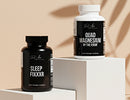
Magnesium is involved in hundreds of enzymatic processes, deficiency is common, and repletion often improves sleep and muscle symptoms that Hashimoto’s patients live with. What I will not tell you is that it lowers antibodies, because I have not seen evidence that it does.
Zinc
Zinc participates in thyroid hormone metabolism and in immune function, and deficiency is not rare, particularly in people who have been eating a restricted diet for a while. Same caveat. Correcting a deficiency is worth doing. Taking more zinc than you need is not, and long-term high-dose zinc depletes copper.
What Vitamins Are Recommended for Hashimoto’s Disease
The ones you are actually low in. That is not a dodge, it is the entire point.
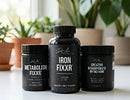
Test rather than guess. Vitamin D, ferritin and iron studies, B12, and selenium if your provider will run it. Iron matters more than most people realize, because iron deficiency both blunts thyroid function and produces the exact fatigue people attribute to the thyroid alone, and it is very common in women.
The reason I keep saying test is that the alternative is what I see constantly, which is a patient arriving with eleven bottles, no baseline for any of them, and no way to tell what is helping. That is expensive, it is confusing, and it makes it impossible to know what to stop.
What Helps Hashimoto’s Naturally
Some things genuinely help and none of them is a supplement.
Getting the thyroid dose right comes first and nothing else on this list outperforms it. Sleep, because immune regulation happens there and Hashimoto’s patients are chronically short of it. Protein, because muscle loss is one of the quiet costs of being undertreated. Managing stress properly, since cortisol and autoimmune flares travel together. Not smoking. And treating gut health as part of the picture rather than a separate hobby, because a large share of immune tissue lives there.
Black cumin seed, Nigella sativa, is the botanical I find most interesting in this specific condition, and I am going to be careful about how I say that. The 2024 review above compared selenium, vitamin D and myo-inositol. It did not assess black cumin seed, so I cannot put it on the same evidence footing as selenium, and I am not going to pretend the two sit in the same place.
If the wider habit is what you are after, how to evaluate a thyroid supplement provider is the piece that will save you the most money.
What to Be Careful With
This is the section brand-written pages skip, because every item in it argues against a sale.
Iodine, Where My Position and the Standard Advice Part Company
Iodine is the one where I differ from most of what you will read, and I would rather say that plainly than let you find out later.
The standard caution runs like this. Iodine is essential and your thyroid cannot build hormone without it, but excess iodine has been implicated in autoimmune thyroid disease, and the NIDDK’s page on Hashimoto’s disease lists iodine-containing medicines among the causes of hypothyroidism.
My published position is different, and I have set out the reasoning at length in my full iodine guide. In short, I do not think sensible, gradually built intake is the problem, I think a great many people are deficient, and I think much of the fear traces back to studies using sudden large doses rather than to the way iodine is actually used in practice.
Here is what I will not do with that disagreement. I will not tell you the question is settled when clinicians I respect land on the other side of it, and I will not have you adding iodine on the strength of a blog post, mine included. If you have Hashimoto’s, iodine is a decision to make with the clinician monitoring your thyroid and your antibodies, with your levels actually measured, and with the way you introduce it agreed in advance. That is the one thing both sides of this argument agree on.
Timing Around Thyroid Medication
Iron and calcium interfere with the absorption of thyroid medication and need to be separated from it by several hours. So do some magnesium forms. Take them together and you will get less from your prescription than your dose implies, then have the dose adjusted upward to compensate for a spacing problem nobody spotted. Ask your prescriber for the spacing rule that applies to your specific medication.
Biotin and How It Wrecks Your Thyroid Lab Results
This one causes real harm and almost nobody knows about it.
Biotin is in most hair, skin and nail supplements, often at high doses. Many common laboratory assays, including thyroid tests, use biotin-streptavidin technology, and high biotin in your blood can make those results falsely high or falsely low depending on the assay. The FDA has warned about biotin interference in laboratory tests for exactly this reason.
A published case report describes a 67-year-old woman whose routine bloods showed a suppressed TSH along with low parathyroid hormone and mildly raised calcium, a combination that raised concern for both hyperthyroidism and malignancy. She was taking 5 mg of biotin daily. It was stopped, the labs were repeated a month later, and everything normalized.
Stop biotin for several days before thyroid labs, and tell the phlebotomist and your provider that you take it. This is the single most useful thing in this post for a lot of readers.
What Is in the Hashimoto’s Formula, and What I Left Out
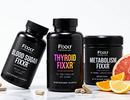
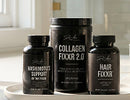
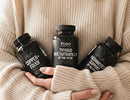
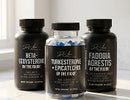
Hashimoto’s Support by the Fixxr lists one active, 500 mg of cold-pressed black cumin seed oil standardized to 3 percent thymoquinone. That is what is on the label. It is not a nine-ingredient blend, and selenium is not among the actives on it.
That was deliberate. I would rather sell you one thing at a real amount than eleven things at doses too small to do anything, which is what most combination thyroid products are. And it means you can add selenium separately, at the amount your labs justify, without doubling up on something already hidden in a blend.
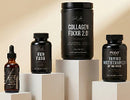
If your problem is conversion rather than antibodies, that is a different product and a different conversation, which is what Thyroid Fixxr is for. The rest of what I formulate, and the reasoning behind each one, is here.
What This Does Not Replace
None of this treats Hashimoto’s. Nothing on this page reverses an autoimmune condition, and nothing here is a substitute for thyroid hormone replacement if you need it.
If you have Hashimoto’s, you need a clinician monitoring your thyroid function, your antibodies and your dose. Supplements sit alongside that, filling nutritional gaps and supporting the systems around it. Anyone selling you a supplement as an alternative to that care is selling you something they should not, and if you have been offered one, that is a reason to leave rather than to buy.
I say that as someone who was on the other side of it. I was told everything was normal while I knew something was wrong, and what fixed it was not a bottle. It was somebody finally running the right tests and adjusting the right dose. The supplements came afterwards, filling in what the testing showed was missing, in that order and not the other one.
So use this page the way I would want a patient to use it. Take it to the person who monitors your thyroid, ask what your selenium, vitamin D, ferritin and B12 are actually doing, ask where they stand on iodine and why, and stop biotin before your next draw. Those four questions will do more for you than anything you can add to a cart today, including anything of mine.
FAQ
What is the best supplement to take for Hashimoto’s?
Selenium has the strongest evidence, with a 2024 meta-analysis finding it significantly reduced both thyroid peroxidase and thyroglobulin antibodies. Two Brazil nuts a day supplies a meaningful amount for many people. Beyond that, the useful supplement is whichever one corrects a deficiency you actually have, which means testing vitamin D, iron and B12 before buying rather than after.
What vitamins are recommended for Hashimoto’s disease?
The ones your bloods show you are short of. Vitamin D, iron and ferritin, and B12 are the ones most often low in the people I see, and iron deficiency in particular produces fatigue that gets blamed entirely on the thyroid. Note that in the 2024 meta-analysis, vitamin D used alone did not effectively lower thyroid antibodies over six months, so take it for adequacy rather than for that.
What helps Hashimoto’s naturally?
Getting the thyroid dose right first, since nothing else outperforms it. Then sleep, adequate protein, real stress management, not smoking, and treating gut health as part of the picture. Black cumin seed is the botanical with the most interesting research in this condition specifically. On iodine, my position differs from the standard caution and I have set out why separately, but either way it is a decision for the clinician monitoring your antibodies rather than one to make from a blog post. And never treat any of this as a replacement for medical care.