










Insulin resistance means the cells in your muscle, fat and liver stop responding properly to insulin, so your pancreas has to make more of it to move the same glucose. Supplements can support how your body handles that glucose. They can't stand in for the food and movement changes that shift the underlying problem.
I'm saying that first because I sell one of the bottles. What I can give you is which ingredients have human trials behind them and where a formula earns its place, which is in the order rather than at the front of it.
What Insulin Resistance Is Actually Doing
Insulin is the key that lets glucose out of your bloodstream and into a cell. In insulin resistance the lock gets stiff, so your pancreas turns out more insulin to force it. For a while that works and your blood sugar reads fine, which is why this goes unnoticed for years.
The scale of it is the part most people don't know. In 2021, about 97.6 million adults in the United States had prediabetes, and the NIDDK notes that most people with insulin resistance and prediabetes have no symptoms at all.
You'll find lists of the 7 signs of insulin resistance everywhere, and the trouble with them is exactly that. Most women I hear from had none of the listed signs and found the problem in a lab result, or found it when a thyroid workup picked it up sideways. Symptom lists are a poor screening tool for something this quiet.
How Do You Improve Insulin Resistance Naturally?
You improve insulin resistance by changing what your muscles do with glucose and by lowering the insulin load they work against. That means resistance training and walking after meals, protein and fiber at the front of a plate, and sleep, because a short night raises insulin resistance the next day. The National Institutes of Health's Diabetes Prevention Program found that losing 5% to 7% of starting weight cut the chance of developing diabetes in people at high risk.
That's the honest ranking, and no supplement I sell outranks it. What supplements do is work on the same glucose handling from a different angle, which is useful once the first list is actually happening rather than instead of it.
What the Evidence Supports, Ingredient by Ingredient
Three ingredient families come up constantly in this category. Only one of them has a body of human randomized trials I'd call solid.
Berberine

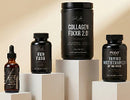
Blood Sugar Fixxr with the capsules out of the bottle. Berberine at 600 mg a capsule, printed on the label rather than buried in a blend.
Berberine is the one with the evidence. A 2023 systematic review and meta-analysis in the Journal of Nutrition pooled 20 randomized trials covering 1,761 people and found berberine lowered fasting glucose, HbA1c, fasting insulin and HOMA-IR, which is the standard index of insulin resistance. The HOMA-IR reduction was 0.85. The authors also reported larger reductions in fasting glucose and HOMA-IR in women than in men, which is worth knowing if you're reading this as a woman in her forties.
That's a meaningful result and it is still a supplement result. It sits alongside the food and movement work, not on top of it. Blood Sugar Fixxr is built on berberine at 600 mg a capsule for that reason, and the dose is on the label rather than buried in a blend, which is how I formulate everything I put my name on.
Magnesium and Chromium
Magnesium turns up in glucose metabolism throughout the body and low intake is genuinely common, so repletion is reasonable when your intake is low. Chromium is the one I'm least enthusiastic about. The trials are mixed, the effect sizes are small where they exist, and it has become a filler ingredient in blends that need a longer label.
Neither belongs in the same tier as berberine on the current evidence, and neither is in my blood sugar formula. If you want either, take it as itself so you know what you took.
The Thyroid Cofactors
This is the part the general blood sugar pages miss. Thyroid hormone sets the pace of glucose handling, so a sluggish thyroid and stubborn insulin resistance travel together more often than either gets credit for. Selenium, zinc and iron matter to thyroid hormone conversion, and a woman working hard on her blood sugar with an untreated conversion problem underneath it will feel like she's pushing a car.
If that sounds like your picture, my guide to blood sugar and the thyroid supplement piece are the two I'd read next.
Where a Formula Helps and Where It Does Not
A formula helps when it delivers a researched ingredient at a dose the research used, and when you can tell what you took. That's it. That's the entire case.
It doesn't help when it's a fourteen-ingredient blend with a proprietary total and no per-ingredient amounts, because you can't reproduce a result you can't measure. It doesn't help when you're taking it instead of the walk. And it doesn't help at all if the real problem is somewhere else, which brings me to the overlap I see most.
How This Shows Up Alongside a Thyroid Problem

The two formulas are sold together because the two problems usually arrive together.
Most of the women who ask me about insulin resistance are already thyroid patients. They're doing the food work, they're moving, and the number won't budge, and the missing piece is that their thyroid is running slow enough to hold metabolism down underneath everything else.
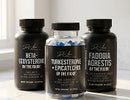
When both are in play I'd rather support both than push harder on one. Thyroid Fixxr and Blood Sugar Fixxr are sold together as the thyroid and blood sugar duo for exactly that reader.
If you'd rather see how the whole line fits together before you choose, it's all in the Fixxr collection.
That is not a reason to skip the workup. A slow thyroid is a diagnosis your clinician makes on labs, not something you infer from a supplement page.
What Will Not Fix It
Nothing in a capsule will reverse insulin resistance naturally on its own, and the pages promising that are selling you a shortcut that doesn't exist.
Apple cider vinegar won't do it. A cleanse won't do it. A single "metabolism" tea won't do it, and the drinks that get passed around for this have no trial behind them that I'd put my name to. Skipping breakfast doesn't fix it either, though eating one built around protein instead of cereal does help the morning it follows.
What works is dull and it compounds. Muscle, walking, protein, fiber, sleep, and then a researched ingredient at a real dose to support the rest. If you want the support piece, start with Blood Sugar Fixxr and give it a fair run alongside the work, not in place of it.
FAQ
How do I reverse insulin resistance naturally?
The changes with the strongest evidence are the ones that alter how your muscles take up glucose. Resistance training, walking after you eat, protein and fiber ahead of refined carbohydrate, enough sleep, and weight loss if you're carrying extra. The NIH's Diabetes Prevention Program put a number on the last one, finding that a 5% to 7% loss cut diabetes risk substantially in people at high risk. Supplements support that work. They don't substitute for it.
What is a good breakfast for insulin resistance?
One built on protein rather than on cereal, toast or juice. Thirty grams of protein with some fat and fiber alongside it, whatever form you'll actually eat, will leave you steadier than the same calories as refined carbohydrate. The pattern matters more than the exact food, and the first meal sets the tone for how the rest of the day goes.
How long does it take to reverse insulin resistance?
Longer than any product page will tell you, and the honest answer is that it depends on how long it has been building and what else is going on. People often feel the difference in energy and cravings inside a few weeks of consistent change, while the lab markers move over months. If nothing is shifting after a solid effort, that's the signal to look for something underneath it rather than to try harder at the same thing.