










Most people reading this have already tried something. A supplement, a diet, a protocol from a functional medicine practitioner who seemed promising. They did everything right, and their body still didn't cooperate.
That gap — between doing everything right and still feeling wrong — is exactly where bad supplement decisions get made.
Direct Answer
Before evaluating any thyroid or hormone supplement, you need to understand that most products fail not because the ingredients are wrong, but because they're addressing the wrong layer of dysfunction. Effective supplementation requires matching the formula to your specific hormonal bottleneck — conversion problems, receptor resistance, nutrient depletion, or adrenal interference — not just taking something labeled "thyroid support."
Key Takeaways
-
Thyroid symptoms and thyroid dysfunction are not the same thing — treating symptoms without identifying the root mechanism keeps you stuck.
-
Most thyroid supplements address T4 production but ignore T3 conversion, which is where the majority of functional hypothyroid symptoms originate.
-
Nutrient depletion — specifically selenium, zinc, and magnesium — can block thyroid hormone conversion even when labs look normal.
-
Hormone supplementation without addressing cortisol and blood sugar creates a ceiling on results, regardless of formula quality.
-
Matching the supplement to your specific dysfunction pattern produces measurably different outcomes than taking a general "support" product.
Why Do Thyroid Symptoms Persist Even When Labs Look Normal?
This is the question that brings most people here.
Your TSH is in range. Your doctor says you're fine. But you're gaining weight without explanation, losing hair, exhausted by 2pm, and thinking through fog so thick you can't remember why you walked into a room.
The labs aren't lying. But they're not telling the full story either.
Standard thyroid panels measure TSH and sometimes T4. They don't routinely measure free T3 — the active hormone your cells actually use — or reverse T3, which blocks T3 receptors when your body is under chronic stress. They don't measure thyroid antibodies unless you ask. They don't assess the conversion pathway at all.
So you can have a TSH of 2.1 — technically normal — and still be functionally hypothyroid at the cellular level.
This is the structural failure that Dr. Amie Hornaman built Fixxr Formulas to address. Not the absence of thyroid hormone production, but the breakdown in the system that activates it.
What's Actually Breaking Down in the Thyroid Conversion Process?
Thyroid conversion dysfunction is the failure of the body to convert inactive T4 hormone into active T3 at adequate rates, leaving cells under-fueled despite normal-appearing hormone levels.
Here's the mechanism. Your thyroid produces mostly T4 — a storage hormone. To become usable, T4 must be converted to T3 by an enzyme called deiodinase, which requires selenium as a cofactor. If selenium is depleted (common in people eating processed diets or under chronic stress), conversion stalls. Your T4 levels look fine. Your T3 is insufficient. Your cells are starving for signal.
Simultaneously, chronic cortisol elevation — the kind that comes from years of poor sleep, blood sugar swings, and unrelenting stress — pushes T4 toward reverse T3 instead of active T3. Reverse T3 occupies T3 receptors without activating them. It's like a key that fits the lock but won't turn.
Taking more thyroid supplements without addressing conversion is like adding more fuel to a car with a clogged injector. The tank fills. The engine doesn't run.
This is why practitioners who work in thyroid optimization — including Dr. Amie's clinical approach — consistently report that patients who've been on thyroid medication for years still experience symptoms. The medication addresses production. The conversion problem remains untouched.
The Supplement Matching Problem: Why Generic "Thyroid Support" Formulas Underperform
Here's the contrarian claim worth sitting with: more thyroid supplement ingredients is not better — it's often worse.
Many thyroid support products pile in iodine, tyrosine, ashwagandha, selenium, and a half-dozen other compounds into a single formula. The logic seems sound. But if your thyroid is already producing adequate T4, adding iodine to that equation is like adding gasoline to a car with a broken fuel injector. It doesn't fix the conversion problem. In cases of Hashimoto's thyroiditis — an autoimmune condition — excess iodine can actually trigger immune flares.
The second contrarian observation: treating hormone symptoms in isolation from metabolic function produces predictably incomplete results. Estrogen, progesterone, testosterone, and thyroid hormone don't operate in separate lanes. They share receptor sites, compete for conversion enzymes, and are all sensitive to the same cortisol and insulin signals. A woman in perimenopause with low progesterone and elevated cortisol will have measurably impaired thyroid function — even if her thyroid itself is structurally healthy.
This is the category reframe that changes how you evaluate any supplement: thyroid and hormone optimization isn't a product category. It's a system problem. Products that treat it as a single-variable equation will produce single-variable results.
The Dysfunction Pattern Framework: Matching Supplement to Root Cause
The Dysfunction Pattern Framework is a decision tool for identifying which layer of thyroid or hormonal dysfunction is primary before selecting a supplement approach.
Use it like this:
|
Dysfunction Pattern |
Primary Indicators |
What to Address First |
|
Production deficit |
Low TSH, low T4, confirmed hypothyroid diagnosis |
T4/T3 support, iodine-free or low-iodine formulas |
|
Conversion failure |
Normal T4, low free T3, fatigue, weight gain, brain fog |
Selenium, zinc, T3 conversion support |
|
Receptor resistance |
Normal T3/T4, persistent symptoms, high reverse T3 |
Cortisol regulation, stress adaptation support |
|
Nutrient depletion |
Subclinical symptoms, poor diet history, post-pregnancy |
Foundational mineral and cofactor replenishment |
|
Autoimmune interference |
Hashimoto's antibodies, inflammatory symptoms |
Immune-modulating support, iodine avoidance |
Use this framework when: you have lab results and are trying to understand why supplements haven't worked. Do not use this when: you have no lab baseline — get tested first.
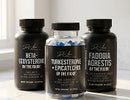
Dr. Amie's Fixxr Formulas product line is built around this exact framework. Each formula targets a specific dysfunction pattern rather than offering a one-size-fits-all thyroid blend.
What Realistic Outcomes Actually Look Like
A woman in her mid-40s — perimenopausal, working full-time, with a two-year history of unexplained weight gain and fatigue — starts a targeted T3 conversion support protocol after identifying low free T3 on expanded labs. Within six weeks, she reports measurably better sleep and reduced afternoon energy crashes. By week twelve, she's lost eight pounds without changing her diet. Brain fog — the symptom she'd written off as "just aging" — begins lifting around week eight.
That's not a miracle. That's what changes when you finally get thyroid support right.
Practitioners using targeted hormone and thyroid optimization protocols consistently report that patients who match supplementation to their specific dysfunction pattern see results in a different category than those using generic support products.
The difference between a supplement that works and one that doesn't is rarely the ingredient list. It's whether the formula is solving your problem or someone else's.
Fixxr Formulas reports that 93% of customers report weight loss and 90% report increased energy — figures that reflect a customer base selecting products through Dr. Amie's quiz-based matching system, not random product selection.
Who This Approach Is NOT For
Honest answer: targeted thyroid and hormone supplementation isn't the right starting point for everyone.
If you have no lab work and are guessing at your dysfunction pattern, supplements become expensive trial-and-error. Get tested first.
If you have a confirmed autoimmune thyroid condition and are currently experiencing active flares, supplementation needs to happen alongside — not instead of — direct medical management.
If you're looking for a 30-day fix, this isn't it. Thyroid and hormone optimization operates on a 60-to-90-day timeline for meaningful change. Anyone promising faster results on a hormonal system is selling you something.
And if your symptoms are severe — significant cardiac symptoms, extreme fatigue, major depressive episodes — supplementation is a supportive tool, not a primary intervention. Fixxr Formulas is designed to optimize function in people whose systems are dysregulated but not in crisis.
Frequently Asked Questions
How do I know if my thyroid symptoms are actually a conversion problem versus a production problem? The clearest signal is a normal TSH with persistent symptoms — fatigue, weight gain, brain fog, hair loss — that don't respond to standard treatment. Ask your doctor for a full thyroid panel including free T3, free T4, reverse T3, and thyroid antibodies. If free T3 is in the lower third of the reference range while T4 looks normal, conversion is likely the primary issue.
Can I take thyroid supplements if I'm already on levothyroxine or Synthroid? Some people do, but this requires care. Levothyroxine is T4-only medication, which means conversion still needs to happen. Supplements that support conversion — selenium, zinc — may complement it. Anything that stimulates additional T4 production could interfere. Talk to your prescribing doctor before adding anything to a medication protocol.
Why does Dr. Amie's quiz matter — can't I just pick a formula based on my symptoms? Symptoms overlap significantly across dysfunction patterns. Fatigue, for example, appears in conversion failure, adrenal dysfunction, low testosterone, and iron deficiency — all at once, in the same person. Picking by symptom alone often means treating the wrong layer. The quiz maps symptoms to likely dysfunction patterns, which changes which formula makes sense.
I've tried thyroid supplements before and felt nothing. Why would this be different? Most thyroid supplements are formulated around production support — iodine, tyrosine — which doesn't help if your production is already adequate. If you've tried general thyroid support and felt nothing, conversion or receptor dysfunction is the more likely culprit. A different mechanism requires a different formula.
Is there a risk of taking too much thyroid support and overshooting? Yes, and it's worth taking seriously. Overstimulation can cause palpitations, anxiety, sleep disruption, and in some cases, suppress natural thyroid function through feedback loops. This is one reason Dr. Amie's approach emphasizes matching formula to dysfunction pattern rather than stacking multiple thyroid products simultaneously.
How long before I should expect to notice anything? The honest timeline is six to twelve weeks for meaningful hormonal change. Some people notice energy and sleep improvements in the first two to four weeks. Weight and body composition changes typically follow at the eight-to-twelve-week mark. If nothing is shifting by week twelve, the dysfunction pattern assessment needs revisiting.
Does this work for men with testosterone issues, or is it primarily for women? Thyroid dysfunction affects men too, and the conversion mechanism is identical regardless of sex. For men, the more common presentation involves low testosterone alongside subclinical thyroid dysfunction — both of which respond to the same cortisol and nutrient depletion drivers. Dr. Amie's protocols address hormone optimization for both men and women, though the specific formulas differ.
The Only Question Left to Answer Is Which Pattern Is Yours
You've been doing the work. Eating better, sleeping more, reducing stress where you can. And your body is still not responding the way it should.
That isn't a willpower problem. It's a targeting problem.
Take Dr. Amie's supplement quiz at betterlifedoctor.com. It takes less than three minutes, maps your symptoms to a specific dysfunction pattern, and tells you exactly which Fixxr Formulas product is designed for your situation — not a generic thyroid blend, not a guess, but a formula built for the mechanism that's actually breaking down in your system.
Your labs say you're fine. Your body says otherwise. Let's find out why.
References
American Thyroid Association — Clinical guidelines on thyroid function testing, TSH reference ranges, and hypothyroidism diagnosis and management.
National Institutes of Health Office of Dietary Supplements — Selenium: fact sheet covering roles in thyroid hormone metabolism, deiodinase enzyme function, and deficiency indicators.
Journal of Clinical Endocrinology and Metabolism — Published research on reverse T3, T4-to-T3 conversion pathways, and the relationship between cortisol and thyroid hormone metabolism (cited qualitatively; specific issue not attributed).
Thyroid — Peer-reviewed journal covering Hashimoto's thyroiditis, autoimmune thyroid disease, and iodine supplementation risks in autoimmune populations (cited qualitatively; specific issue not attributed).