





)

Most thyroid supplement failures aren't caused by bad products. They're caused by well-formulated products aimed at the wrong problem. According to the American Thyroid Association, an estimated 20 million Americans have some form of thyroid disease. And the majority remain symptomatic despite supplementation. That's a matching problem, not a commitment problem.
Key Takeaways
-
Matching a supplement to your specific thyroid failure point matters more than any ingredient list
-
Iodine supplementation without knowing your TPO antibody status can actively worsen Hashimoto's autoimmune activity
-
T4-to-T3 conversion failure is a separate clinical problem from low thyroid production. And it demands a different solution
-
Research published in PMC (Payer et al., 2023) found that selenium combined with myo-inositol produced measurable TSH and antibody reductions within three months, but dosing and combination both matter
-
A "normal" TSH result doesn't rule out conversion failure, receptor resistance, or active autoimmune load
Why Do "Good" Thyroid Supplements Keep Failing?
The supplement market is organized around symptoms, not mechanisms. You search "thyroid supplement for fatigue" and you get a product grid. What you actually need is a map of which step in your thyroid hormone pathway isn't working. Those are fundamentally different problems.
Someone with Hashimoto's autoimmune thyroiditis has a completely different underlying issue than someone with sluggish T4-to-T3 conversion. Or someone who's so nutrient-depleted that conversion can't happen regardless of what they take. Handing all three people the same thyroid complex is roughly like treating every type of chest pain with the same drug. It helps one person. It does nothing for the others. And in some cases, it makes things worse.
That's the root cause behind the frustration. Not weak willpower. Not inferior products. Wrong match.
What Are the 7 Mistakes. And What's Actually Happening?
Mistake 1: Taking Iodine Without Checking Your Autoimmune Status
Iodine is necessary for thyroid hormone synthesis. It's also one of the fastest ways to trigger an autoimmune flare if you have undiagnosed Hashimoto's.
Here's the mechanism: excess iodine increases thyroid peroxidase (TPO) activity. In Hashimoto's, TPO is a primary target for immune attack. More TPO activity equals more immune activation. Which means more tissue destruction. Even while the supplement is technically doing what it was designed to do. A 2023 analysis by Gfeller et al., published in PMC, found significant inconsistency in iodine content across prenatal supplements, with only 60.9% of pregnancy-indicated products meeting the recommended 150 µg threshold. The broader point: iodine dosing in supplements varies wildly, and "more is better" is a dangerous assumption in any autoimmune context.
If you haven't tested your TPO antibodies, you don't actually know whether iodine is supporting your thyroid or fueling the immune response that's slowly damaging it.
Mistake 2: Treating TSH as the Full Story
TSH tells you how loudly your brain is signaling the thyroid to produce hormone. It doesn't tell you whether the thyroid is responding adequately, whether T4 is converting to active T3, or whether T3 is reaching your cells at all.
You can have a TSH that sits squarely in the reference range and still experience every classic hypothyroid symptom. That's not a mystery. It's a conversion problem. T4 is a storage hormone. Your body converts it to T3 in the liver and gut. Chronic stress, systemic inflammation, poor gut health, and specific nutrient deficiencies all impair that conversion step. Taking a supplement aimed at boosting T4 production when conversion is the actual problem just creates a larger pool of unconverted, inactive hormone. Nothing moves.
Mistake 3: Using Selenium Without Pairing It With Myo-Inositol
Selenium is one of the most consistently supported thyroid micronutrients in the research literature. It's required for the enzyme that converts T4 to T3, and it plays a direct role in reducing autoimmune antibody load in Hashimoto's. Most thyroid supplements include it. Far fewer use it strategically.
Research published in PMC by Payer et al. (2023) found that a combination of myo-inositol (600 mg) and selenium (83 mcg) administered over six months produced significant reductions in TSH, total cholesterol, and autoimmunity markers. With measurable changes appearing at three months. The reason the combination outperforms selenium alone is mechanistic: myo-inositol supports TSH receptor sensitivity while selenium handles conversion efficiency and antibody burden. Addressing one without the other leaves a piece of the pathway broken.
Mistake 4: Stacking Supplements That Compete for Absorption
Calcium, iron, and magnesium all share mineral transport pathways in the gut with thyroid-relevant nutrients. Taking your thyroid support formula alongside a calcium-rich meal or an iron supplement reduces how much actually gets absorbed. This isn't theoretical. It's basic gut biochemistry. When multiple minerals compete for the same transporter, each one's absorption rate drops. The supplement isn't failing. The timing is. And nobody's talking about it.
Mistake 5: Chasing Symptom Relief Instead of the Underlying Dysfunction
Consider a common pattern: someone dealing with persistent fatigue, brain fog, and weight that won't shift starts taking an adrenal support stack because the symptom overlap looked close enough. Three months pass and nothing changes. What they actually had was a T4-to-T3 conversion problem. Their TSH looked fine, but conversion was impaired downstream. The adrenal protocol didn't touch that mechanism.
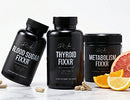
This is exactly the pattern that the Thyroid Fixxr formula was built to interrupt. Targeting the conversion and support mechanisms that generic thyroid products routinely miss, rather than chasing symptoms without a map.
Mistake 6: Expecting Results Before the Biology Has Time to Respond
Thyroid hormone metabolism is slow by design. T4 has a half-life of roughly seven days. Meaningful changes in free T3 levels, TSH, and autoimmunity markers take weeks to months. Not days. The three-month improvement window seen in the Payer et al. research isn't an outlier. That's how long thyroid physiology actually takes to shift.
Most people abandon a supplement protocol at two to three weeks. Right before it would've started working. Sixty to ninety days is the minimum honest evaluation window for any thyroid support protocol.
Mistake 7: Selecting Based on Ingredient Count Instead of Mechanism Fit
A supplement with twelve thyroid-supporting ingredients isn't automatically superior to one with four. What matters is whether those ingredients address your specific dysfunction at doses that actually do something.
Here's a typical scenario: someone purchases a thyroid complex with ashwagandha, iodine, selenium, zinc, and B vitamins. All legitimate ingredients, all poorly deployed. The selenium dose is 25 mcg, well below the research-supported range. The iodine level is inappropriate for someone with Hashimoto's. The ashwagandha is there for label appeal, not mechanistic fit. More ingredients, worse outcome. An impressive label isn't a therapeutic protocol
How Does Dysfunction-First Supplement Matching Actually Work?
The approach Dr. Amie Hornaman built her formulas around starts with identifying which step in the thyroid hormone pathway has broken down before any product is selected. The Dysfunction-First Matching framework maps to four distinct failure points:
-
Production failure. The thyroid isn't synthesizing enough T4
-
Conversion failure. T4 isn't converting to active T3, despite normal TSH
-
Receptor resistance. T3 is present, but cells aren't responding to it
-
Autoimmune load. Immune activity is actively damaging thyroid tissue
Most products on the market address failure point one. The majority of people who've "tried everything" are stuck at points two, three, or four. That mismatch is why the frustration compounds. And why effort alone doesn't close the gap.
The full supplement line at Better Life Doctor is organized around this framework. Each formula maps to a specific failure point, not a symptom cluster.
When This Approach Has Real Limits
Supplements, even precisely matched ones, don't replace prescription medication for severe hypothyroidism or Hashimoto's that has progressed to significant thyroid tissue loss. If your TSH is substantially elevated with confirmed autoimmune destruction, a conversation with a prescribing clinician belongs before any supplement protocol.
Supplements also can't resolve a gut absorption problem serious enough to block nutrient uptake entirely. Untreated celiac disease or significant gut dysbiosis can mean the right nutrients aren't getting in regardless of formula quality or timing.
And if your symptoms are being driven by overlapping conditions, perimenopause, insulin resistance, or both, a thyroid-only approach won't produce complete results on its own. That's why Dr. Amie's protocols are built to account for hormonal overlap rather than treating the thyroid in isolation.
Symptom-First vs. Dysfunction-First: What the Difference Looks Like
|
Factor |
Going It Alone With Generic Supplements |
Working With Dr. Amie's Framework |
|
Starting point |
Symptom list and product reviews |
Lab picture mapped to specific failure point |
|
Product selection |
Ingredient marketing and star ratings |
Mechanism-matched formula targeting your dysfunction |
|
Iodine decision |
Defaulted to "included in most formulas" |
Conditional on TPO antibody status |
|
Dosing rationale |
Label directions |
Research-supported therapeutic ranges |
|
Timeline expectation |
Vague, often unrealistic |
60-90 days minimum, clearly communicated upfront |
|
Risk of symptom worsening |
Higher. Wrong mechanism compounds the problem |
Lower. Targeted match reduces misfire |
|
Typical outcome |
Inconsistent, often abandoned mid-protocol |
More predictable, built on actual physiology |
Frequently Asked Questions
Why do thyroid supplements work for some people and not others?
Because "thyroid supplement" is a category that covers products targeting very different failure points in the same hormone pathway. When the product matches the dysfunction, results tend to follow. When it doesn't, nothing moves. Regardless of ingredient quality or brand reputation.
Can I take thyroid supplements if I'm already on levothyroxine?
Possibly, but not without checking first. Calcium, iron, and certain herbs can interfere with levothyroxine absorption or affect hormone levels. Talk to your prescribing clinician before adding anything. That said, many people on levothyroxine still have conversion or receptor resistance issues that medication alone doesn't address. And that's where targeted supplementation can fill a real gap.
How long before I should notice a difference?
Give it a minimum of sixty days, and ideally ninety. Thyroid physiology moves slowly. T4 has roughly a seven-day half-life, and meaningful shifts in conversion efficiency and antibody levels take months. Most people who stop at three weeks would've seen results at eight.
Is iodine safe if I have Hashimoto's?
Not without knowing your antibody levels first. Excess iodine can increase TPO activity. And in Hashimoto's, that triggers more immune attack on thyroid tissue. Testing TPO antibodies before adding iodine isn't optional. It's the difference between supporting your thyroid and accelerating the damage.
What's the difference between T4 and T3 supplements?
T4 is the storage form of thyroid hormone. Your body has to convert it to T3 before it becomes usable. T3 supplements provide the active form directly, bypassing the conversion step entirely. For someone with conversion failure, T3 support is often more effective. For someone with production failure, T4 support is the right starting point. Taking the wrong one for your failure point doesn't help regardless of dose.
My doctor says my labs are normal but I still feel terrible. What's happening?
Standard thyroid panels typically check TSH and sometimes total T4. They frequently miss free T3, reverse T3, and thyroid antibodies. The markers that reveal conversion failure and autoimmune activity. A normal TSH alongside low free T3 is a real clinical picture that explains every classic hypothyroid symptom. The labs aren't wrong. They just aren't showing you the full story.
Are thyroid supplement bundles worth it, or is that just a volume strategy?
They're worth it when the products in the bundle address complementary failure points. Say, combining conversion support with autoimmune load support. They're not worth it when they're just the same mechanism in larger quantities. The supplement bundles at Better Life Doctor are built around the Dysfunction-First framework, so the combinations are intentional, not arbitrary.
If you've cycled through supplements, felt nothing, blamed yourself, and started over. The problem almost certainly isn't your commitment. It's that no one has identified your specific failure point and built a protocol around it.
That's the work Dr. Amie Hornaman does. Start by exploring the full supplement line to see how each formula maps to a distinct piece of the thyroid pathway. Or reach out directly if you want a real conversation about what's actually driving your symptoms and which approach fits your situation.
About the Author
Better Life Doctor is a thyroid and hormone optimization company founded by Dr. Amie Hornaman, a thyroid and hormone expert who specializes in resolving the gap between normal-looking labs and persistent, life-disrupting symptoms. Dr. Amie develops premium supplement formulas targeting specific dysfunction patterns in thyroid hormone production, conversion, and autoimmune load. Built from clinical frameworks she's applied and refined through her practice. Better Life Doctor works with women and men aged 30-50+ who've tried conventional approaches and are ready for a targeted, results-driven protocol built around their actual physiology.
References
Gfeller et al. (2023). Iodine content in prenatal supplements. PMC. Payer et al. (2023). Selenium and myo-inositol effects on TSH and autoimmunity markers: multicenter study. PMC.