



Most People Get Wrong
Comparing thyroid supplement prices by the bottle is the wrong calculation — and it's exactly why so many people finish month after month of supplements feeling no different than when they started. The real question isn't what you pay. It's what you get per dollar of actual biochemical change.
Key Takeaways
-
The sticker price of a thyroid supplement tells you almost nothing about its true cost-per-outcome — formulation quality, bioavailability, and ingredient sourcing determine whether you're spending or investing.
-
In-house formulated supplements designed by a clinician using patient data carry higher upfront costs because they eliminate the trial-and-error stack most people build over 12–18 months.
-
Outsourced, white-label thyroid supplements routinely use low-cost nutrient forms with poor bioavailability — meaning your body absorbs a fraction of what the label claims.
-
The hidden cost of budget thyroid support is not just wasted money — it's delayed progress, masked symptoms, and months of feeling like you're doing everything right while nothing changes.
-
Dr. Amie Hornaman built Fixxr Formulas from clinical patient patterns, not market research — that distinction matters when your symptoms are specific and your patience is gone.
Why Does the Same Supplement Category Have Such a Massive Price Range?
Walk into any supplement aisle — or scroll any wellness marketplace — and you'll find thyroid support products ranging from $12 to $120 for what looks like the same thing. Same claims. Similar ingredient lists. Wildly different prices.
The difference is almost never the label. It's everything behind it.
The manufacturing model is the variable most buyers never see. Outsourced supplements are produced by contract manufacturers who formulate for cost efficiency. They use the cheapest compliant forms of ingredients — magnesium oxide instead of magnesium glycinate, cyanocobalamin instead of methylcobalamin, synthetic selenium forms with lower tissue retention. The label says "selenium." What it doesn't say is that your body may absorb a fraction of what's listed, depending on the form used.
In-house formulation means a clinician — someone who has actually run labs on real patients and tracked outcomes — decides which forms go in, at what doses, and why. That process costs more. But it's not a premium you're paying for branding. It's a premium you're paying for the decision-making that happened before the bottle was filled.
> The sticker price of a thyroid supplement is not the cost. The cost is what you spend before you find something that actually works.
What Does "In-House Formulation" Actually Mean — and Why Does It Change the Math?
In-house formulation is the practice of a clinician or medical team designing a supplement formula based on observed patient outcomes, lab patterns, and functional medicine protocols — rather than licensing a generic formula from a contract manufacturer.
Most supplement brands don't formulate anything. They choose from a catalog.
A contract manufacturer offers hundreds of pre-built formulas. A brand picks one, adds a logo, sets a price. This is white-labeling, and it's the dominant model in the supplement industry because it's fast and cheap. The problem isn't that these products are fraudulent. The problem is that they're designed for the average — and if you have thyroid dysfunction, hormonal imbalance, or metabolic dysregulation, you are not the average.
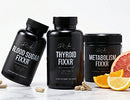
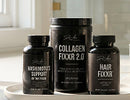
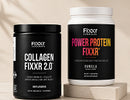
Dr. Amie Hornaman built Fixxr Formulas differently. The formulas came from years of clinical practice — watching which nutrient combinations moved labs, which forms of selenium and zinc actually showed up in follow-up bloodwork, which adaptogens made a measurable difference in cortisol patterns versus which ones just made people feel like they were doing something. That's not marketing language. That's the difference between formulating from outcomes versus formulating from a catalog.
The practical math: a woman who cycles through four different thyroid support products over fourteen months at roughly $35 each — plus the cost of repeat labs to check whether anything is working — has easily spent $600 or more before landing on something effective. A single well-formulated product designed to address her specific symptom cluster often resolves that cycle in 60–90 days.
The Real Cost Isn't the Supplement — It's the Stack
Here's the contrarian claim worth sitting with: most people with thyroid dysfunction don't have a supplement problem. They have a stacking problem.
The average person who comes to Fixxr Formulas has already tried three to six separate supplements — iodine, ashwagandha, a generic thyroid support blend, some form of B-complex, maybe a separate selenium. Each one bought based on a recommendation or a headline. None of them coordinated. Some of them actively working against each other.
Iodine is the clearest example. The American Thyroid Association has consistently noted that excess iodine intake can trigger or worsen autoimmune thyroid conditions like Hashimoto's. A supplement that adds iodine to that equation isn't providing fuel — it's adding a variable that can accelerate the problem.
The cost of the wrong stack isn't just financial. It's the months of continued symptoms, the worsening labs, the doctor visit where you're told your TSH is "technically normal" while you're gaining weight and losing hair.
> Most people aren't under-supplemented. They're incorrectly supplemented — and the difference costs them more than money.
The Supplement Cost Transparency Framework
Use this decision tool to evaluate the true per-outcome cost of a thyroid supplement before you buy — not after you've finished three bottles with nothing to show.
Use it when you're comparing two or more thyroid support products and the price difference is more than $20 per month. Skip it when you're already using a clinician-formulated protocol and your labs are moving in the right direction.
Score each product across four variables on a 1–3 scale:
|
Variable |
What to Look For |
Red Flag |
|
Ingredient Form |
Methylated B vitamins, selenomethionine, zinc bisglycinate |
Oxide forms, cyanocobalamin, generic "selenium" |
|
Dose Transparency |
Exact mg listed per ingredient |
Proprietary blends hiding individual doses |
|
Formulator Credentials |
Clinician-designed with patient outcome data |
Brand with no named formulator |
|
Symptom Specificity |
Targets your specific cluster (fatigue, weight, hair) |
Generic "thyroid support" label |
A product scoring 10–12 is worth its price point. A product scoring 4–6 is almost certainly a white-label formula — regardless of what the marketing says.
Fixxr Formulas scores consistently at the top of this framework because Dr. Amie's clinical background is the actual source of the formulation decisions — not a contract manufacturer's catalog.
How Does This Play Out in Real Situations?
Two scenarios illustrate the cost gap clearly.
Scenario one: a patient starts with the cheapest available thyroid support blend at $18 per month. After four months, there's no change in energy, continued hair loss, and no meaningful shift in free T3. The product contained magnesium oxide, a proprietary blend with undisclosed selenium dose, and no zinc. Total spent: $72. Outcome: zero measurable change.
Scenario two: a different patient starts with a clinician-formulated product containing selenomethionine at a therapeutic dose, zinc bisglycinate, and methylated B vitamins at $85 per month. At the 60-day mark, free T3 has moved, energy is noticeably improved, and hair shedding has decreased. Total spent: $170. Outcome: measurable biochemical shift and symptom improvement.
The cheaper product cost $72 to accomplish nothing. The premium product cost $170 to accomplish something. By every meaningful measure, the more expensive option was cheaper.
Who Is This NOT For?
This framing — and Fixxr Formulas specifically — is not the right fit for everyone. Honest answer.
If your thyroid labs are completely normal and your symptoms are driven by something else entirely — adrenal dysfunction, perimenopause, or insulin resistance without thyroid involvement — a thyroid-specific supplement protocol won't move the needle. You need a different starting point.
If you're currently on prescribed thyroid medication and haven't discussed supplementation with your prescribing physician, don't add a thyroid support stack without that conversation first. Some nutrients affect medication absorption timing — iron and high-dose selenium, for example, can interfere with levothyroxine uptake if taken simultaneously.
And if you're looking for a one-bottle fix that works in two weeks, this isn't that. Thyroid tissue responds slowly. Practitioners working with functional thyroid protocols consistently report that meaningful, measurable change takes 60–90 days minimum.
Frequently Asked Questions
Why do some thyroid supplements cost $15 and others cost $90 — are the expensive ones actually better? The price difference almost always comes down to ingredient forms and formulation origin. Cheaper products use low-cost nutrient forms with poor bioavailability — your body absorbs less, so you're paying for something that doesn't fully work. Products using clinician-selected forms like selenomethionine and methylated B vitamins deliver more per dose, which changes the cost-per-outcome calculation entirely.
How do I know if a thyroid supplement is actually doing anything? The clearest signal is lab movement — specifically free T3, free T4, and reverse T3 if your practitioner will run it. Symptom improvement alone isn't sufficient because placebo effects are real, especially with energy. If you've been on a supplement for 90 days with no lab change and no meaningful symptom shift, the formula isn't working for your biochemistry.
Is it cheaper to buy individual thyroid nutrients separately instead of a combined formula? It looks cheaper on paper. In practice, most people end up with a poorly coordinated stack — wrong doses, wrong forms, and sometimes nutrients that compete for absorption. A well-designed combined formula accounts for those interactions. The apparent savings from buying separately are routinely absorbed by the cost of getting the ratios wrong.
Can I take thyroid supplements while I'm on levothyroxine or Synthroid? Some supplements are compatible; others affect absorption timing. Iron, calcium, and high-dose selenium can interfere with levothyroxine if taken at the same time. Standard guidance is to take thyroid medication on an empty stomach and space supplements by at least four hours. Always confirm with your prescribing doctor before adding anything new to your protocol.
How long before I should expect to feel a difference from a quality thyroid supplement? Practitioners working with functional thyroid protocols consistently report 60–90 days as the realistic window for measurable change. Some people notice energy shifts earlier — within three to four weeks — but lab movement takes longer. Anyone promising dramatic results in two weeks is not describing thyroid physiology accurately.
What's the difference between a thyroid support supplement and thyroid medication — and do I need both? Thyroid medication replaces or supplements the hormones your thyroid isn't producing. Thyroid support supplements provide the cofactors your body needs to convert, use, and regulate those hormones — selenium for T4-to-T3 conversion, zinc for receptor sensitivity, B vitamins for metabolic function. Many people benefit from both, working in coordination. They are not interchangeable.
I've tried thyroid supplements before and felt nothing — why would Fixxr Formulas be different? The most common reason thyroid supplements fail is formulation quality — wrong ingredient forms, underdosed nutrients, or a formula built for the average rather than your specific symptom cluster. Dr. Amie built Fixxr Formulas from clinical patient data, not a contract manufacturer's catalog. That distinction matters when you've already been through the cycle of trying things that don't work.
The Decision You're Actually Making
You're not deciding between cheap and expensive. You're deciding between paying once for something that works and paying repeatedly for something that doesn't.
The exhaustion you feel is real. The weight that won't move despite eating less and exercising more is real. If you've been cycling through supplements, feeling like you're doing everything right while your body disagrees — that experience is not a personal failure. It's a structural one, built into how most thyroid supplements are made and sold.
Dr. Amie built Fixxr Formulas for exactly this moment. Not a generic thyroid blend. Not a white-label catalog product. Formulas built from the clinical patterns of people who felt exactly the way you feel right now — and don't anymore.
Take the Fixxr Formulas quiz to match your specific symptom cluster to the formula Dr. Amie designed for it. I've got your back.
References
American Thyroid Association — clinical guidelines on iodine supplementation and autoimmune thyroid disease risk.
National Institutes of Health Office of Dietary Supplements — bioavailability data on selenium forms (selenomethionine vs. sodium selenite) and mineral absorption interactions.
U.S. Pharmacopeia — supplement manufacturing standards and ingredient form verification guidelines.