 FLASH SALE 🔥











My position is that most people with Hashimoto's should not be told to avoid iodine outright. Iodine is the raw material thyroid hormone is built from, and a blanket avoid ignores that. The conditions matter more than the answer. The right form, started low, increased slowly, and supervised by someone monitoring your labs.
That's a minority position in a lot of thyroid spaces and I've held it for years, so let me show you the argument it's up against rather than pretend it doesn't exist.
Can I Take Iodine If I Have Hashimoto's?
For most people with Hashimoto's, yes, with conditions attached that aren't optional. The form has to be one you can increase gradually rather than a fixed high dose. You start lower than you think you need to and move slowly. And you do it with a clinician watching your antibodies and your thyroid function, because you're working on an autoimmune condition and not on a vitamin.
That's the whole answer. What follows is why I think the blanket version is wrong, and what I think is actually happening when someone reacts badly.
Where the Avoid Iodine Caution Comes From
The caution is not invented and I'm not going to caricature it. There's a real body of work showing that iodine intake and thyroid autoimmunity move together at a population level, and it's worth looking at directly rather than through a supplement company's summary of it.
The NIH's Office of Dietary Supplements puts the population case plainly, noting that some people, such as those with autoimmune thyroid disease and iodine deficiency, may experience adverse effects with iodine intakes considered safe for the general population. A 2025 systematic review in Diseases went through the literature on universal salt iodization programs, identified 74 studies and assessed antibody data in 31 of them, and concluded that excess iodine intake without adequate monitoring may partly explain the prevalence and distribution of Hashimoto's thyroiditis.
Read that conclusion carefully, because the phrase doing the work in it is without adequate monitoring. Both of those sources are describing populations given a fixed amount with nobody watching. Neither is describing a supervised individual with labs in front of her.
Why Some People React, and What That Reaction Actually Is
Here's where I part company with the standard advice. When someone starts iodine and feels worse, the usual conclusion is that iodine is attacking their thyroid. My reading is that in a lot of cases they're feeling a displacement reaction rather than a thyroid reaction.
Iodine competes with the other halides, which is to say bromide, fluoride and chlorine, and those have been accumulating in all of us for decades. Bring iodine in and it moves them, and moving them makes people feel rough for a while. That's the pattern I've watched in supervised patients for years, and it resolves with support and a slower pace rather than with stopping.
I want to be careful about how strong I make that claim. It's my clinical read and the mechanism has a literature behind it, and it isn't settled science. What follows from it, practically, is that the speed and the supervision matter more than the yes or no.
The Form Matters More Than the Number on the Bottle
If you take one thing from this post, take this. Almost every bad iodine experience I've heard about involved either the wrong form or too much too soon, and the conversation almost never gets that far because it stops at avoid.
What I Look For

A dropper rather than a tablet. One drop is a starting dose you can actually control.
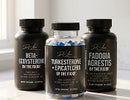
A form I can start very low with and increase gradually, so the pace is under your control rather than fixed by a tablet. That's why Iodine Fixxr is a liquid nascent iodine dosed by the drop, and why the instruction on the page is to start with a single drop and increase from there. The product page also sets out the halide support and the T4 to T3 conversion role that follow from the position above.
What I Avoid
Kelp and seaweed as an iodine source, because the content varies enormously batch to batch and you have no idea what you took. Iodized table salt as a strategy, because it was designed to prevent goiter across a population rather than to supply anyone individually. And any fixed high dose taken without someone watching your labs.
What I Would Be Careful With Alongside Hashimoto's

One standardized active in the bottle, so a change can be read against a single variable.
The supplements I'd be careful with in Hashimoto's aren't the ones people expect. Anything immune-stimulating deserves a conversation first, because you have an immune system already doing too much. Kelp and seaweed products belong here again for the same batch-variability reason. And any multi-ingredient blend where you can't see the per-ingredient amounts, because when something changes you'll have no way to tell what caused it.
My own Hashimoto's formula is deliberately narrow for that reason. Hashimoto's Support carries one standardized active rather than a long list, so you can read a change against a single variable. The rest of the line sits in the Fixxr collection and is built to the same principle.
The First Signs of Low Iodine
Low iodine shows up first as the thyroid working harder to do the same job. An enlarging thyroid or a feeling of fullness in the neck is the classic early sign, and the rest of the picture is the general hypothyroid one, so fatigue, cold intolerance, dry skin and weight that won't move.
The scale of the raw material question is worth a number. The ODS fact sheet notes that an iodine-replete adult carries about 15 to 20 mg of iodine in total, and that 70% to 80% of it sits in the thyroid gland. That's what the gland is for, and it's the reason a blanket avoid always sat badly with me.
None of those signs is specific enough to act on alone, and iodine status is measurable. If you think this is you, that's a test to ask for rather than a bottle to buy. My full iodine guide goes through the wider picture, and the thyroid supplement piece covers what else the gland needs.
Why This Is a Supervised Conversation
I've argued against the blanket caution for the whole of this post, and I'd undo that work if I replaced it with a blanket yes. This is an autoimmune condition and the people who do well with iodine do well because someone is watching the numbers while they go.
So here's what I'd actually have you do. Get your iodine status and your antibodies measured, take the question to the clinician monitoring your thyroid, and if you go ahead, go slowly enough to notice what's happening. If your clinician's answer is a flat no with no reasoning attached, it's fair to ask what it rests on. That's a better conversation than either avoid or don't, and it's the one this post exists to make possible. For the thyroid side of the same picture, Thyroid Fixxr is where most of my patients start.
FAQ
Can I take iodine if I have Hashimoto?
In my view most people with Hashimoto's can, and the conditions are what make it work. A form you can start low with and increase gradually, a pace slow enough that you notice what's happening, and a clinician monitoring your antibodies and thyroid function while you do it. A blanket avoid treats iodine as a threat rather than as the raw material thyroid hormone is made from. A blanket yes ignores that this is an autoimmune condition. The supervision is what sits between them.
What supplements should be avoided with Hashimoto's?
I'd be cautious with anything designed to stimulate the immune system, since yours is already overactive. I'd avoid kelp and seaweed as an iodine source because the content varies wildly between batches and you can't tell what you took. And I'd avoid any blend that hides its per-ingredient amounts, because when something shifts you'll have no way of knowing which ingredient did it. Narrow formulas with stated doses are easier to learn from.
Can iodine worsen hypothyroidism?
It can, and that's an honest yes rather than a caveat. The NIH's Office of Dietary Supplements notes that high intakes can produce goiter, a raised TSH and hypothyroidism, and that people with autoimmune thyroid disease may react to amounts considered safe for everyone else. What those cautions describe is a fixed amount given without monitoring. The answer isn't to avoid iodine forever, it's to know your status, go slowly, and have someone reading your labs.
What are the first signs of low iodine?
The earliest sign is usually the thyroid enlarging or the neck feeling full, because a gland short of raw material works harder to make the same hormone. After that the picture looks like general hypothyroidism, so tiredness, feeling cold, dry skin, thinning hair and weight that won't move. None of it is specific enough to act on by itself, and iodine status can be measured, so testing beats guessing.