 JOIN THE VIP LIST






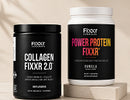


Somewhere along the way this question turned into a fight, with whey people calling collagen useless and collagen people treating whey like it is only for bodybuilders. Both camps are wrong, because the two proteins are not competing for the same job. Once you see what each one actually is, choosing gets simple.
Is it better to take collagen or protein powder?
Neither is better. They are different tools. Whey is a complete protein built for muscle repair and growth, with all nine essential amino acids. Collagen is rich in glycine, proline, and hydroxyproline, the aminos your body uses for skin, joints, connective tissue, and gut lining. Pick based on the job, or use both, because they do not cancel each other out.
What each protein actually is
Whey comes from milk and digests quickly, which is why it earned its place around workouts. It is complete, it is leucine-rich, and leucine is the amino acid that flips the switch on muscle protein synthesis. If your goal is building or keeping muscle, whey or another complete protein is doing the heavy lifting.
Collagen is the most abundant protein in your body, but not in your shaker bottle by default. It is the structural protein in your skin, joints, tendons, and gut lining. Collagen peptides are that protein broken into absorbable pieces, and they are not complete, which is exactly why judging collagen as a muscle protein misses the point. My Collagen Protein Fixxr 2.0 is one ingredient, collagen peptides, because that single ingredient has a job of its own.
Where each one earns its keep
Reach for whey when the goal is muscle, strength, recovery from training, or simply hitting a protein target that food is not covering. It is the efficient choice for all of those, and it is why whey and complete blends anchor the protein powder side of my shelf.
Reach for collagen when the goal is skin elasticity, hair and nail strength, joint comfort, or gut support. Those tissues are literally made of the stuff, and the glycine and proline in collagen peptides are the raw materials they draw on. This is also why collagen shows up in my conversations with thyroid patients so often, since skin, hair, and gut complaints sit near the top of that symptom list.
Can you take both together
Yes, and plenty of my patients do. There is no interaction problem and no absorption war between them, which is why the collagen side of my line is built to sit alongside whatever protein you already use. A practical pattern I like is whey near training for muscle, collagen daily for tissue support, taken whenever it is easiest to stay consistent. If you only want one scoop a day, go back to the job question. Muscle goal, whey. Skin, joint, and gut goal, collagen.
One honest caveat while we are here. Collagen should not be your only protein source, because it is incomplete. It supplements a diet that already contains real protein. It does not replace it.
Frequently Asked Questions
Is it better to have collagen or protein powder?
It depends entirely on the goal. For muscle building and recovery, a complete protein like whey wins because it has all nine essential amino acids and plenty of leucine. For skin, joints, and gut lining, collagen peptides supply the specific aminos those tissues are built from. They are complementary, not interchangeable.
Is it okay to take collagen and whey protein together?
Yes. They do not interfere with each other, and using both covers two different jobs at once. A common routine is whey around workouts and collagen at any consistent time of day. Total protein still counts toward your daily intake either way.
Is there a downside to taking collagen powder?
The main mistakes are treating it as a complete protein, which it is not, and expecting overnight results, which no protein delivers. Some people notice mild digestive adjustment at first. Beyond that, the real downside is buying blends full of fillers, which is why I kept mine to one ingredient.
Is collagen good for high cortisol?
Collagen does not lower cortisol, and I would not buy it for that. What it does offer is glycine, which supports the tissues stress tends to wear on. If high cortisol is your actual concern, that is a conversation about stress, sleep, and testing, not a protein powder.